
Industrial Exoskeleton Applications by Industry —
Manufacturing, Logistics, Construction & More
Exoskeletons deliver measurable ergonomic impact wherever workers lift, bend, reach or handle materials repeatedly. The physical task determines the solution — not the industry label.
Below are some of the industries where exoskeletons are already proving particularly valuable.
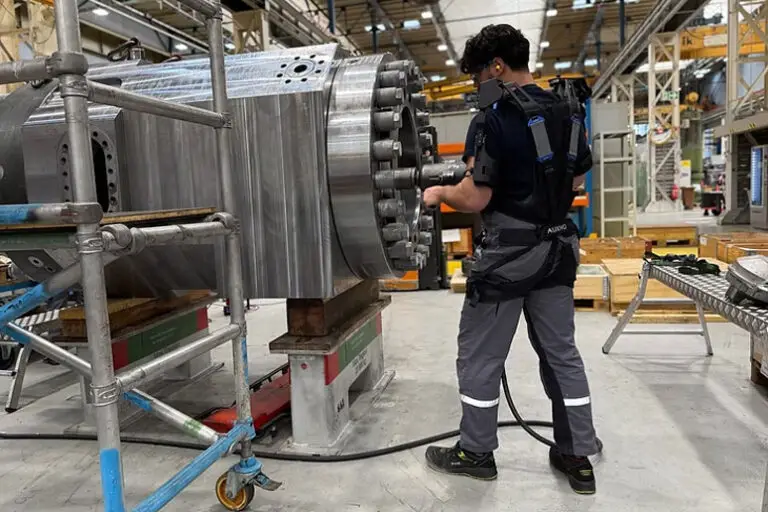
Manufacturing
Manufacturing environments often involve repetitive assembly work and overhead tool operations.
– Repetitive assembly
– Overhead tool use
– Component handling
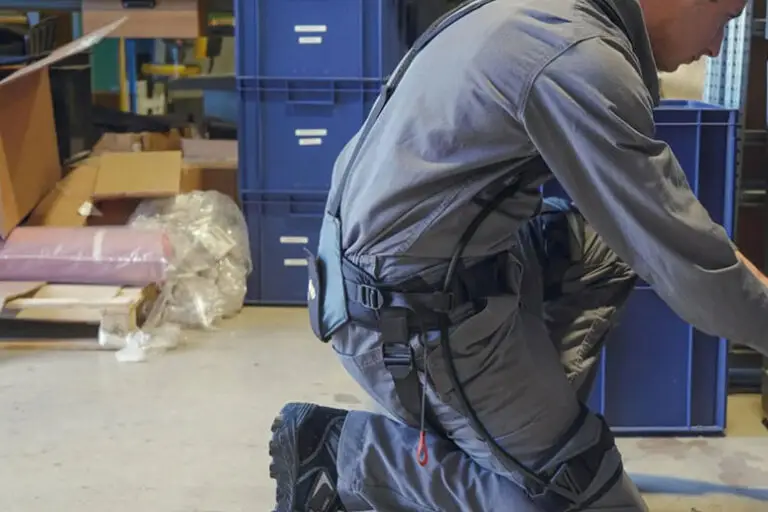
Logistics
Warehouse operations, courier hubs, parcel sorting centers, palletizing lines and high-frequency material handling.
– Loading and unloading
– Warehouse picking
– Handling boxes or containers
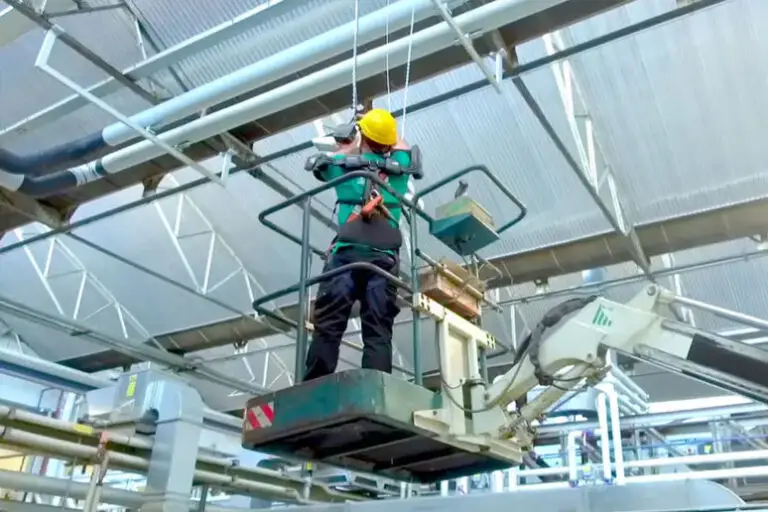
Construction
Drywall installation, structural assembly, surface finishing and overhead construction tasks.
– Overhead drilling
– Drywall installation
– Sanding and finishing
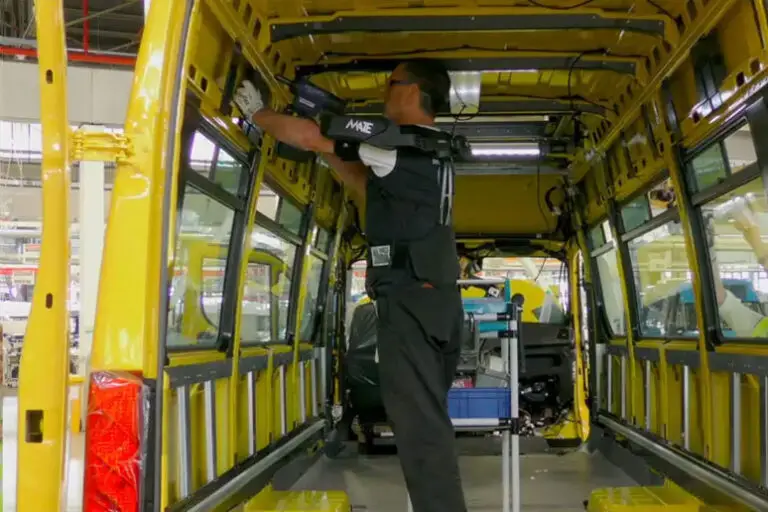
Automotive Service
Automotive service operations often involve repetitive lifting, forward bending and prolonged work under vehicles.
– Lifting wheels and heavy components
– Working under vehicles
– Repetitive tool operations
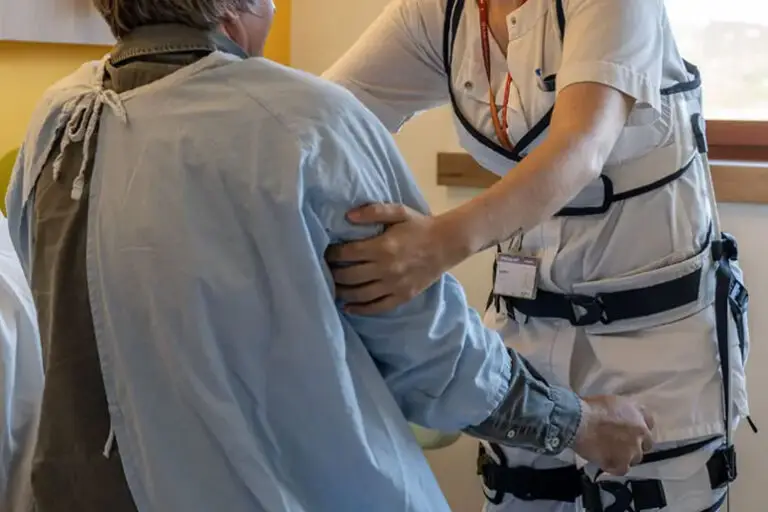
Healthcare
Healthcare facilities involve significant physical demands — patient transfers, repositioning and prolonged static postures during procedures and rounds.
– Patient lifting and transfer
– Prolonged standing during procedures
– Repetitive bending in care routines

Agriculture
Field work, milking systems, greenhouse production, food processing and repetitive manual operations.
– Harvesting tasks
– Repetitive bending work
– Carrying materials or equipment
Work tasks matter more than industry
While exoskeletons are adopted across many sectors, their effectiveness is determined primarily by the type of physical task. Explore the most common work scenarios where exoskeletons provide the greatest ergonomic benefit.
Industries FAQ
Do exoskeletons work in every industry?
Exoskeletons are most effective in environments where workers perform repetitive lifting, forward bending, overhead work, or physically demanding manual tasks. While they are widely used in manufacturing, logistics, construction and agriculture, the same ergonomic principles can apply across many sectors.
How do I know if exoskeletons are suitable for my company?
The best way to evaluate their impact is through a structured on-site demonstration. This allows companies to test the exoskeleton in real working conditions and assess comfort, usability and ergonomic benefits.
Are exoskeletons difficult for workers to use?
Most passive industrial exoskeletons are lightweight and require minimal training. Workers typically adapt to them quickly because they support natural body movements rather than restricting them.
Can exoskeletons reduce workplace injuries?
Exoskeletons are designed to reduce muscle fatigue and lower the physical strain associated with repetitive tasks. Many companies implement them as part of broader ergonomics and workplace safety initiatives.
Experience the impact of industrial exoskeletons — live.
Request an on-site demonstration and see how your physically demanding work can become safer, more sustainable and more efficient.