
Industrial Exoskeleton Use Cases —
Overhead Work, Lifting, Assembly & Material Handling
– Exoskeletons selected by movement pattern — not by job title.
– Tested on-site across manufacturing, logistics, construction and assembly.
– Passive support for overhead work, repetitive lifting, assembly tasks and material handling.
– No automation. No replacement. Just less strain on the workers who do the hardest jobs.
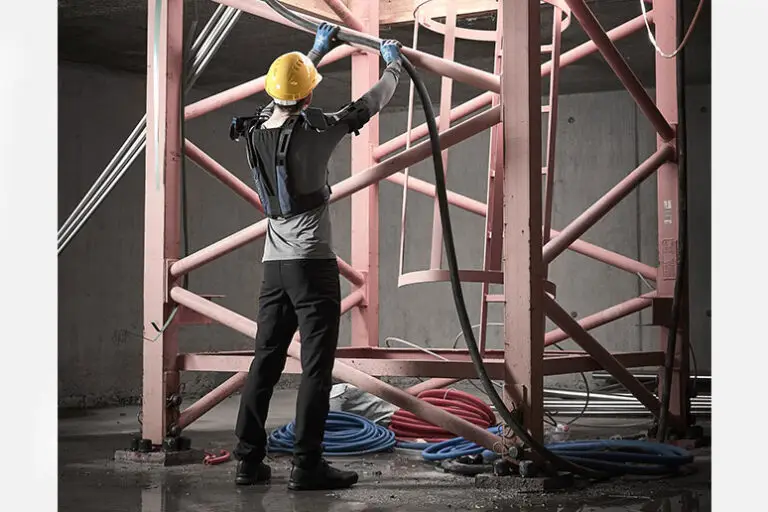
Overhead Work
– Prolonged work with elevated arms
– Repetitive shoulder flexion
– Precision tasks performed above chest level
Shoulder-support exoskeletons counteract gravitational load on the arms, reducing deltoid and trapezius fatigue during sustained overhead tasks.
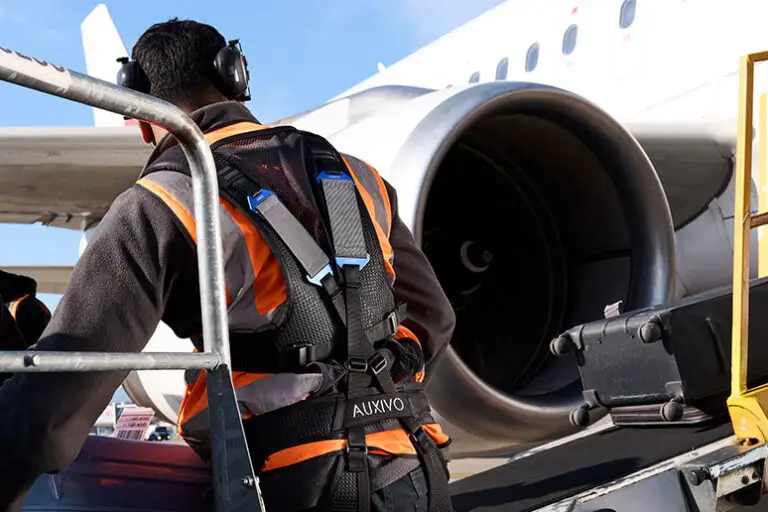
Repetitive Bending & Lifting
– Repeated lifting from floor or knee level
– Forward trunk flexion under load
– Sustained lumbar strain during shift
Back-support exoskeletons store energy during forward bending and release it on the return movement — reducing peak lumbar load with every repetition.
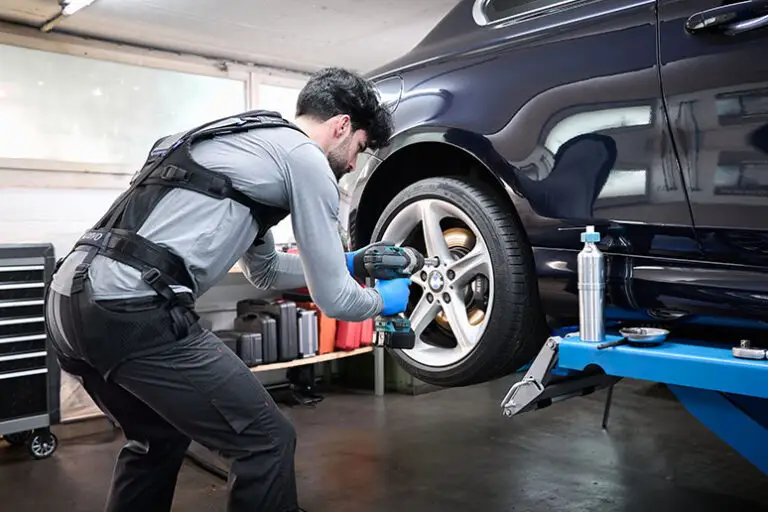
Repetitive Assembly Work
– Continuous hand-tool operations
– Repetitive arm movements
– Static upper-body posture
Shoulder-support exoskeletons offload static arm elevation during assembly tasks, reducing cumulative fatigue and helping maintain precision across long production cycles.
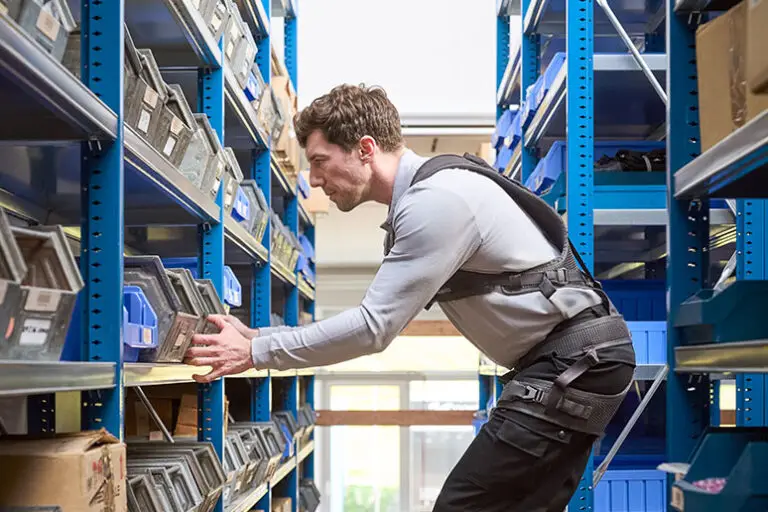
Material Handling
– Loading and unloading operations
– Handling boxes or containers
– Warehouse picking and placement
Back-support exoskeletons reduce lumbar compression during asymmetric loading and high-frequency lifting — protecting workers in the most injury-prone movements in logistics and warehousing.
Applications FAQ
How are industrial exoskeletons selected for a specific workplace?
Industrial exoskeletons are not selected by sector, but by movement patterns and physical load.
Evaluation typically starts with analyzing repetitive movements and testing the device in the real working environment.
Do exoskeletons replace workers or automate tasks?
No. Industrial exoskeletons do not replace workers or automate tasks.
They support natural body movement and reduce physical strain during demanding operations.
Can workers comfortably use exoskeletons during a full shift?
Modern industrial exoskeletons are lightweight and designed to allow natural movement.
Most models can be comfortably used during long shifts, especially in tasks involving repetitive strain.
Which types of work benefit the most from exoskeleton support?
Exoskeletons are particularly effective in tasks involving overhead work, repetitive lifting, sustained bending and other physically demanding movements.
How do companies typically evaluate exoskeleton solutions?
The most reliable approach is an on-site pilot where workers test the device during real tasks.
This allows companies to evaluate comfort, productivity impact and ergonomic benefits before larger-scale implementation.
Experience the impact of industrial exoskeletons — live.
Request an on-site demonstration and see how your physically demanding work can become safer, more sustainable and more efficient.