
How Passive Industrial Exoskeletons Work
Industrial exoskeletons are advanced wearable mechanical systems engineered to reduce physical strain through intelligent load redistribution to stronger structures of the body.
They represent a new generation of personal protective equipment (PPE), designed to mitigate musculoskeletal risk in demanding industrial environments. By providing mechanical assistance during moments of increased effort, exoskeletons reduce strain on key areas of the body — particularly the shoulders and lower back — while preserving full natural movement and operational flexibility.
Types of Industrial Exoskeletons
Industrial exoskeletons are divided into two main categories:
Passive Exoskeletons
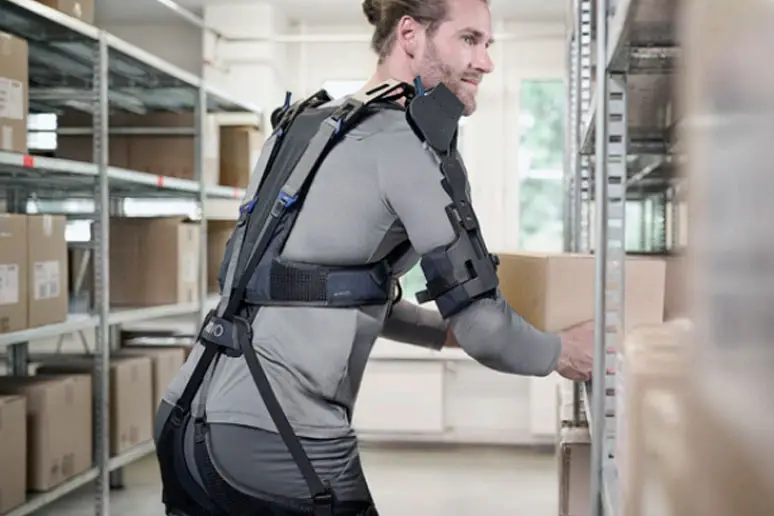
- Fully mechanical
- No motors
- No batteries or charging required
- Powered by springs, elastic elements and lever-based mechanisms
- Lightweight
Active Exoskeletons
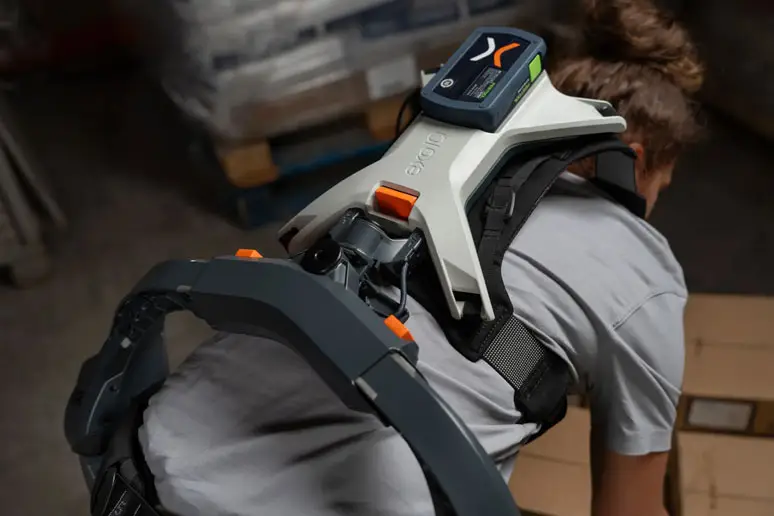
- Powered by motors and batteries
- Generate active force for maximum support
- Suitable for the most physically demanding tasks
- Precise, real-time adaptive assistance
- Ideal when passive support is insufficient
Mechanical Architectures of Passive Exoskeletons
A passive industrial exoskeleton can be built using different mechanical architectures, depending on the level of support required and the type of task performed.
Soft, Elastic-Based Systems
Soft passive systems use textile structures combined with elastic tension elements.
Support is generated through elastic resistance that activates during movement.
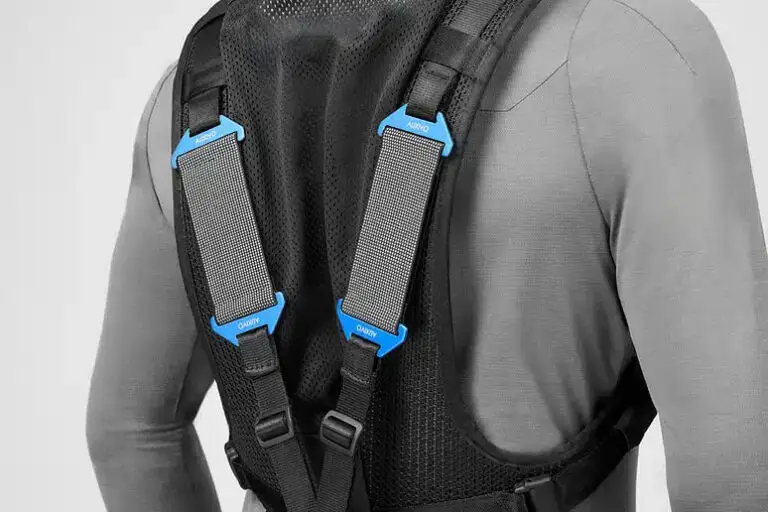
These systems are typically:
- Lightweight
- Flexible
- Suitable for dynamic tasks
- Designed for moderate load assistance
Rigid, Spring-Based Systems
Rigid passive exoskeletons use mechanical frames with springs and articulated joints. They provide structured load transfer from the upper body to stronger areas such as the hips and legs.
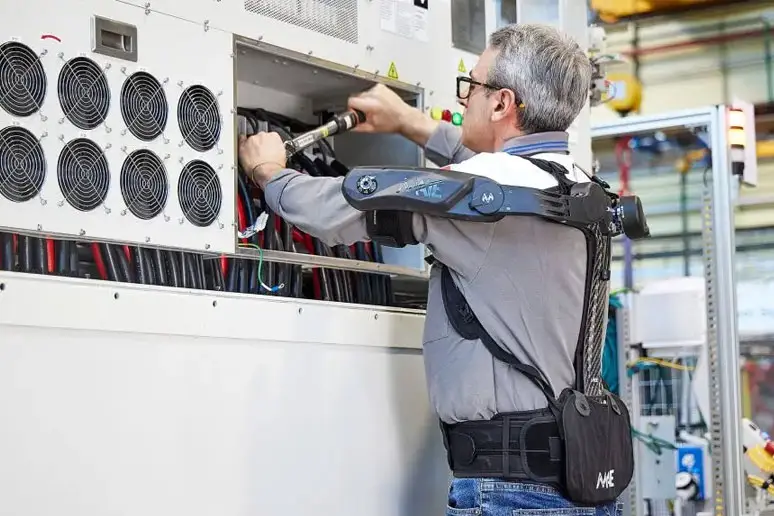
These systems:
- Offer more consistent mechanical support
- Provide higher force assistance
- Are suited for sustained or repetitive industrial tasks
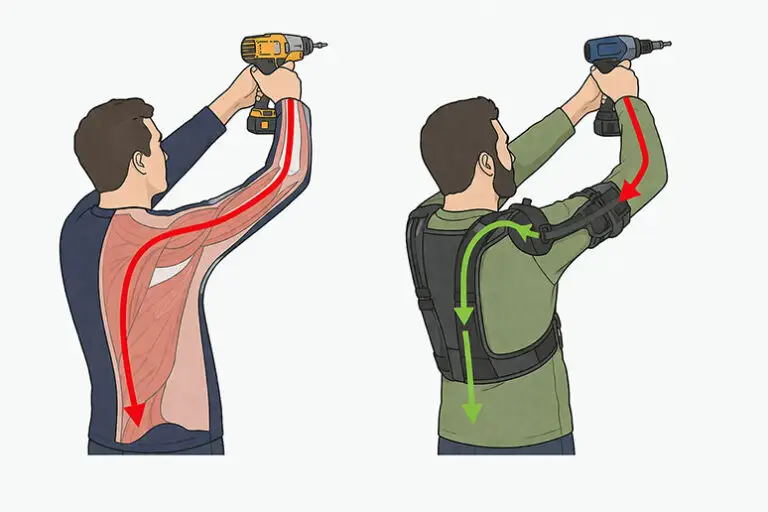
How Load Redistribution Works in Industrial Exoskeletons
Industrial exoskeletons reduce physical strain by mechanically redistributing load away from vulnerable joints — particularly the shoulders and lower back — toward stronger parts of the body.
When an operator bends, lifts or raises the arms:
- Mechanical elements engage automatically
- Part of the force is transferred to the hips and legs
- Muscular effort in the shoulders or lower back is reduced
The movement remains natural.
The workflow remains unchanged.
Why Passive Exoskeletons Scale in Industry
Robotic automation requires significant capital investment, infrastructure and fixed production setups.
Industrial exoskeletons offer a different approach:
- Preserve human flexibility
- Require no infrastructure changes
- Can be deployed immediately
- Scale across tasks and shifts
Exoskeletons support people while maintaining adaptability in dynamic industrial environments.
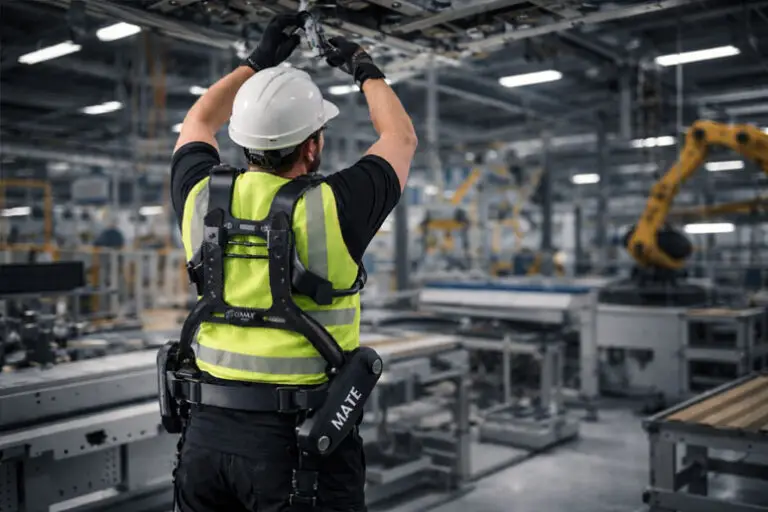
Industrial Exoskeleton as Personal Protective Equipment (PPE)
Exoskeletons represent a new generation of personal protective equipment that reduces physical strain and limits the likelihood of cumulative musculoskeletal overload during physically demanding work.
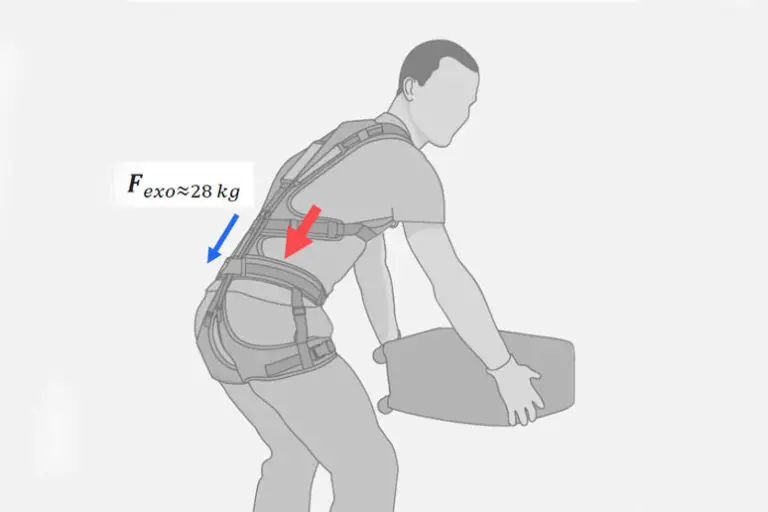
Industrial Exoskeletons Are Not Robots
Industrial exoskeletons are not automation systems. They do not replace workers — they support them.
In modern industry, robotics and exoskeletons can coexist. Exoskeletons offer an immediate and cost-effective way to reduce physical strain without redesigning production processes.
They enhance human capability while preserving flexibility, experience and decision-making on the shop floor.
Exoskeletons are not about replacing workers. They are about extending sustainable human performance.
Frequently Asked Questions About Passive Industrial Exoskeletons
What is a passive industrial exoskeleton?
A passive industrial exoskeleton is a fully mechanical wearable support device designed to reduce physical strain in demanding industrial tasks.
It operates without motors, batteries or external power.
How does a passive exoskeleton reduce physical strain?
It uses springs, elastic elements or lever-based mechanisms to redistribute load from vulnerable joints — such as the shoulders and lower back — to stronger parts of the body like the hips and legs.
Are passive industrial exoskeletons safe?
Yes. Passive systems do not generate powered force and do not rely on electronics.
They provide proportional mechanical support that follows natural body movement.
In what situations are passive exoskeletons most effective?
They are most effective in tasks involving:
Repetitive lifting
Prolonged overhead work
Sustained trunk flexion
Physically demanding manual handling
Do exoskeletons replace automation?
No. Industrial exoskeletons enhance workers rather than replace them.
They provide ergonomic support while preserving flexibility and adaptability in dynamic production environments.
Experience the impact of industrial exoskeletons — live.
Request an on-site demonstration and see how your physically demanding work can become safer, more sustainable and more efficient.