
Why Industrial Exoskeletons Matter
Health, Productivity & Workplace Ergonomics
Musculoskeletal disorders are the leading cause of work-related absence in Europe. In environments where workers lift, bend and reach repeatedly, the physical toll accumulates — shift by shift, year by year. Industrial exoskeletons reduce that load mechanically, without changing the workflow. The result: fewer injuries, less fatigue and workers who stay productive longer.
Reduced Physical Strain
Exoskeletons mechanically offload the back and shoulders during lifting, bending and overhead work — reducing peak muscle load by up to 40% in the most demanding movements.
Lower Injury Risk
Musculoskeletal disorders account for over 40% of work-related absences in the EU. Exoskeletons reduce the biomechanical stress that drives MSD development in repetitive industrial tasks.
Reduced Fatigue
Workers wearing exoskeletons report less muscle fatigue at the end of the shift — maintaining output quality and reducing error rates in the final hours of physically demanding work.
Improved Productivity
Real-world deployments show productivity gains of 10–15% in industrial environments — and higher in highly repetitive tasks — as workers sustain pace without the physical cost of unassisted manual work.
Worker Retention
Physical strain is a leading reason experienced workers leave industrial roles. Exoskeletons reduce the physical cost of demanding jobs — making them sustainable long-term and improving retention of skilled workers.
Ergonomics Compliance
Exoskeletons support EU ergonomics directives and workplace safety programs — giving HSE managers a measurable, deployable tool for reducing MSD risk across the workforce.
Key Benefits of Industrial Exoskeletons
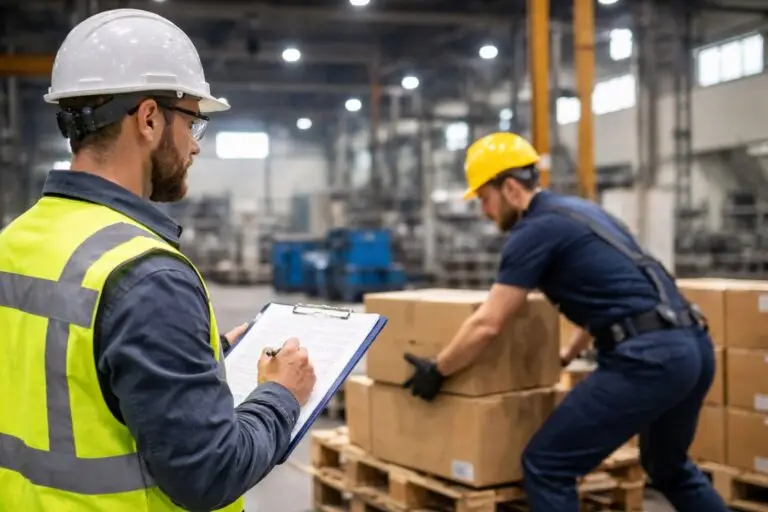
Why Companies Implement Exoskeletons
- Reducing musculoskeletal disorder (MSD) risk
- Improving worker comfort
- Lowering absenteeism
- Supporting ergonomics programs
ROI / Business Impact
When evaluating the return on investment of industrial exoskeletons, companies should consider not only wages but the total cost of worker absenteeism and productivity loss.
In many real-world deployments, companies also observe productivity improvements. Depending on the industry and task type, productivity gains can range from 10–15% in industrial environments to significantly higher improvements in highly repetitive manual tasks.
As part of a broader ergonomics strategy, exoskeletons can therefore provide both health benefits for workers and measurable economic value for employers.
Workplace Ergonomics Challenges
Many industrial workplaces still rely on repetitive manual tasks such as lifting, bending and overhead work. These activities can lead to physical strain, fatigue and long-term musculoskeletal disorders among workers.
Industrial exoskeletons provide practical ergonomic support by reducing the biomechanical load on the body while allowing workers to perform their tasks naturally.
- Repetitive lifting and material handling
- Frequent bending and forward leaning
- Overhead tool operation
- Physically demanding manual tasks
As part of a broader ergonomics strategy, exoskeletons can help companies create safer and more sustainable working environments.
Benefits FAQ
Do industrial exoskeletons increase productivity?
Industrial exoskeletons can help reduce fatigue during repetitive and physically demanding tasks. In many cases, this allows workers to maintain a more consistent work pace and sustain productivity throughout the shift.
How quickly do workers adapt to exoskeletons?
Most passive industrial exoskeletons require minimal training. Workers typically adapt within a short period as the systems support natural body movement.
Do exoskeletons replace workers?
No. Industrial exoskeletons are designed to assist workers, not replace them. They support the body during demanding tasks while allowing employees to perform their work normally.
Can exoskeletons be used for a full work shift?
Many passive exoskeletons are designed for extended use during physically demanding tasks. However, usage time can vary depending on the specific model and work activity.
Experience the impact of industrial exoskeletons — live.
Request an on-site demonstration and see how your physically demanding work can become safer, more sustainable and more efficient.